Overview
Welcome to the foundation of managing AI securely and effectively. To harness the power of artificial intelligence while mitigating its inherent risks, organizations must adopt a holistic governance approach. This session covers the strategic value of AI, risk mitigation, and resource management.
1. The Strategic Value of AI
Successful AI adoption is deeply linked to business alignment. Understanding the benefits is key to justifying investment and defining success.
- Strategic Advantage: AI drives cost savings through automation and process optimization.
- Business Alignment: AI initiatives must support the core organizational mission.
- Value Creation: Every project should utilize a cost-benefit analysis to ensure meaningful outcomes.
2. Managing AI Risks
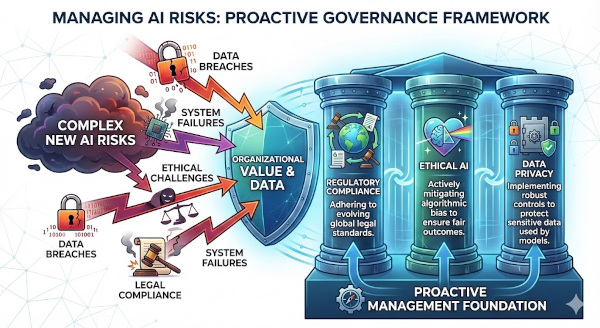
Despite the benefits, AI introduces complex new risks that require proactive management.
Key Risk Areas: Data breaches, system failures, ethical challenges, and legal compliance.
Critical Governance Pillars:
- Regulatory Compliance: Adhering to evolving global legal standards.
- Ethical AI: Actively mitigating algorithmic bias to ensure fair outcomes.
- Data Privacy: Implementing robust controls to protect sensitive data used by models.
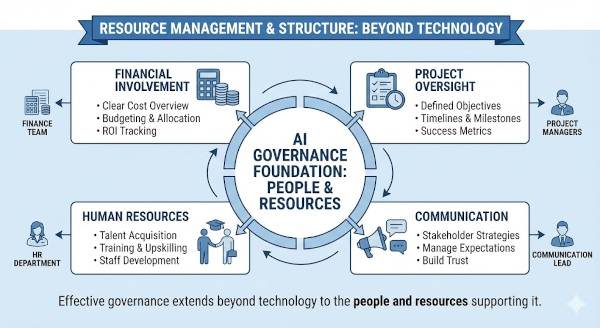
3. Resource Management & Structure
Effective governance extends beyond technology to the people and resources supporting it.
- Financial Involvement: Clear overview of costs, budgeting, and ROI.
- Project Oversight: Defined objectives, timelines, and success metrics from the start.
- Human Resources: Ensuring the right talent is in place and existing staff receive necessary training.
- Communication: Strategies to manage stakeholder expectations and build trust.
Summary
AI Security Management requires a holistic approach. Remember these four key governance concepts:
- Maximizing Value
- Rigorous Risk Management
- Ensuring Compliance
- Smart Resource Allocation